

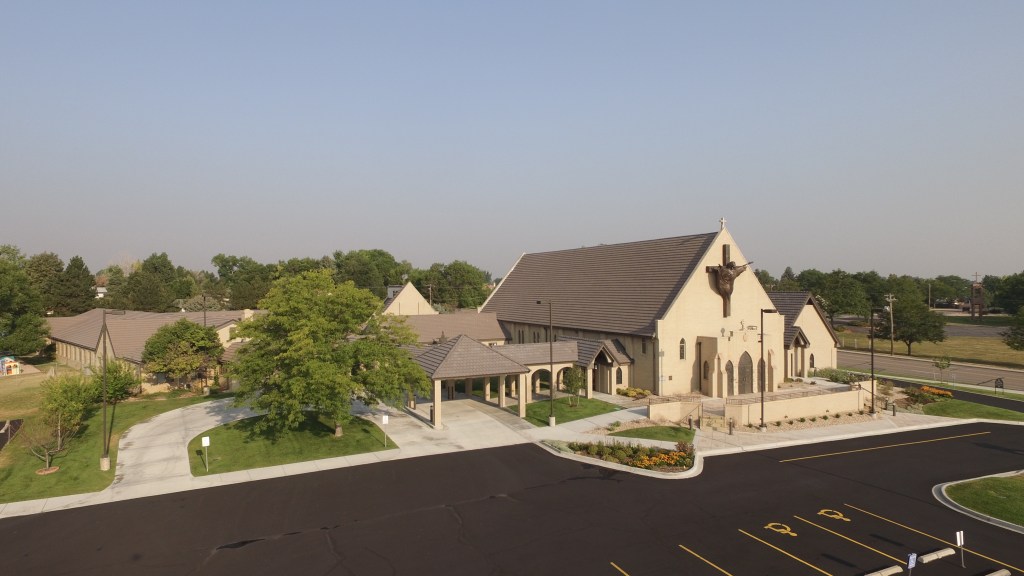
After several months of blissful retirement, I went back to work. I didn’t take a regular job, just three Sundays of supply work. The location was the only problem, being in Aurora, and the far southeastern part of that city as well. If you’re familiar with the Denver metro area, there is simply no good way to get from Evergreen to that part of Aurora. Getting there was no problem as they had an 8:00 am service and the traffic is light at that hour of the morning. Going home after the 10:15a service was another matter. However, the greatest demand on my time was sermon preparation. Having never been to that church before, I could have just recycled a past sermon on those lessons (aka, “cold canned tongue”). But that shortcut didn’t seem fair and I’ve always enjoyed the work of sermon prep as much as delivering the result.
While the above paragraph does offer an excuse for my absence from posting, it also brings me back to the issue of the Priesthood of Christ and what it means to be in Christ.
At its best, sermon preparation involves not only study but prayer. The people to whom the sermon is preached are not some random collection of individuals but a Christian community with its own personality, its own history and its own challenges. When the preacher has a long-standing relationship with that congregation, he or she has a wealth of material to draw upon in connecting the Scriptures with the community. However, the supply priest rarely has that luxury. At best, we might know the circumstances that brought us there, perhaps something about the priest we are filling in for (or replacing!) and perhaps some stories we may have heard about the congregation over the years.
In the case of my three sermons I had very little information and therefore praying about the sermon took on some urgency. The third sermon in particular took a bit of a twist at the end. The lessons included a reading from Amos warning those in the northern kingdom about their indifference to the corruption of their society while indulging in luxurious living. The reading from Luke was the story Jesus tells of the rich man and the poor beggar, Lazarus. While there were several elements of the story, in the light of the Amos reading it wasn’t hard to make the connection between the indifference of the wealthy of Israel and that of the rich man. The twist came because the congregation’s dedication was to St. Martin of Tours.
The best known story of St. Martin comes during his time as a catechumen, one being prepared for baptism. Here is the best known story of St. Martin (with thanks to Wikipedia): “While Martin was a soldier in the Roman army and stationed in Gaul (modern-day France), he experienced a vision, which became the most-repeated story about his life. One day as he was approaching the gates of the city of Amiens, he met a scantily clad beggar. He impulsively cut his military cloak in half to share with the man. That night, Martin dreamed of Jesus wearing the half-cloak he had given away. He heard Jesus say to the angels: ‘Martin, who is still but a catechumen, clothed me with this robe.’”
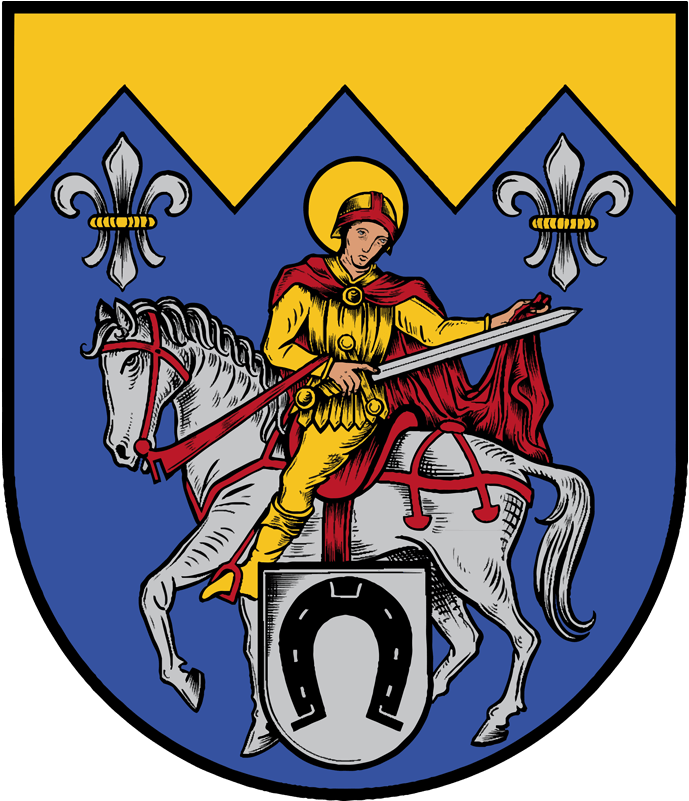
I included a retelling of that story to remind them that their name dedication was to a person who was not indifferent to the needs of the poor and was paying attention to the world surrounding him. This was not an injunction to do something they weren’t already doing. Rather it was intended to show them that their current practices were a fulfilling of divine purpose they had received when taking on the name of St. Martin’s church.
One further twist in that sermon came after we’d arrived at the church and I was reviewing the bulletin before the 8:00a service. In the announcements there was a longish paragraph on being a “DIY” congregation. Their rector had resigned early in September, thus the reason for supply clergy. In the clergy-centric culture of the Episcopal Church, the departure of the priest can leave a congregation feeling adrift and uncertain. The main point of that article was to remind them that they have, in fact, always been a congregation that took care of the things that made up Christian community and that life would be “business as usual” as they started searching for a new priest. When added to the lessons and the connection with St. Martin, this provided an unexpected conclusion to the sermon for that morning.
One might ask how any of this story relates to the priesthood of Christ and what it means to be “in Christ.” To answer that I need to go back to the distinction made between the priest/presbyter and the priest/hierus made in earlier posts on this subject. My status as a priest/presbyter gave me a platform to speak to this congregation, but that’s really all it gave me. If I were going to be for them a priest/hierus then I would need to bring God’s word and God’s blessing to their life as a Christian community. In order to do that I would need pray actively in seeking what God wanted said and pray passively in paying attention to things around me that God was orchestrating.
Those actions do not require ordination as a priest/presbyter. For that period, and precisely because I did not know what to say to that community, I was able to be “in Christ” for an extended period. What the effect of what I spoke and on whom I do not know. I spoke priestly (hierus) words of blessing and encouragement. That is, I believe, what I was supposed to do. Everything else from there is God’s problem, not mine.
Now this may seem a rather trivial example in the light of the acts of Adam’s priesthood to separate, abuse, wound and destroy. But even a cursory review of stories from the Bible demonstrates that God’s plans are not worked out as grandiose schemes but through ordinary people in ordinary places. Whether it is Abraham, or the young Samuel or David, or the young Jeremiah or Mary the mother of Jesus or the fishermen Jesus chose, we dare not despise the small things that appear to be God’s favored way of working.
The priesthood of Christ, the antidote to the broken priesthood of Adam, is the Christ-directed acts of common men and women who take the time and effort to live “in Christ” and thus become agents for Christ’s healing in unexpected ways.
[Jesus] also said, “The kingdom of God is as if someone would scatter seed on the ground, and would sleep and rise night and day, and the seed would sprout and grow, he does not know how. The earth produces of itself, first the stalk, then the head, then the full grain in the head. But when the grain is ripe, at once he goes in with his sickle, because the harvest has come.”
(Mark 4:26-29)

 The Apprentice Priest
I miss your sermons, Jack. They were always pertinent. St. Martin’s is blessed to have had you as supply!
LikeLike