

Fursey’s Four Fires (redux +1)

I would love a day to come when this article, first written eight years ago, would be irrelevant to our times. Unfortunately, that day is not today. The following article was written for the parish newsletter of Trinity Episcopal Church, Greeley, Colorado in 2016. I posted it again in 2020. I thought about updating it then and now, but aside from references to my former parish and the “Trinity Way of Life” it is unfortunately as relevant in 2024 as it was in 2020, and 2016, and every year in between.

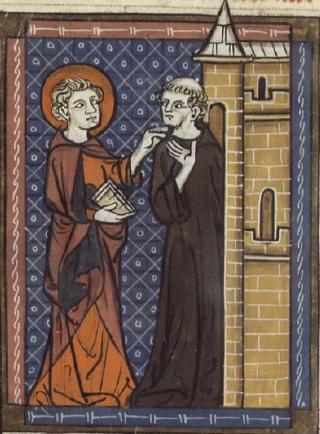
So who in the world is Fursey? He’s a rather obscure Irishman who gets a mention in Bede’s History of the English Church and People. I read that book in seminary and for something written in 731 AD it’s quite readable. Bede mentions quite a few Irishmen for a book devoted to the development of Anglo-Saxon England. Each year I get a reminder of Fursey for a week during the second week of Advent in the prayers Dorie Ann and I use at the lighting of our Advent wreath at home. One section of the devotional tells of a vision of “four fires through which unclean spirits threatened to destroy the earth.” They are listed as the destroying fire of falseness, the destroying fire of greed, the destroying fire of disunity and the destroying fire of manipulation. And each year, but particularly this one, we comment on how contemporary this feels.

Fortunately, the devotional doesn’t end there. It continues: But Fursey urged everyone he met to do as the angels told him:  to fight against all evils.  He encouraged them with these words he had heard:  “The saints shall advance from one virtue to another;” and, “The God of gods shall be seen in our midst.”

At first the encouragement Fursey offers seems pretty pale against a set of destroying fires. In a world that seems beset by falseness, greed, disunity and manipulation we might be excused for wanting stronger stuff that what is on offer. Yet implied in these messages from the angels is a charge to follow the Jesus path as the means by which God overcomes the destroying fires.

The first charge is to fight against all evils. The first all too human reaction is to take up arms, whether political, economic or military, meeting might with might to set things right. This is not the Jesus path. If we fight fire with fire, fire always wins. There are other ways to fight against evil than to use the tools of evil. Paul enjoins the Roman Christians to follow the Jesus path in these words: “Do not be overcome by evil but overcome evil with good” (Romans 12:21) To confront evil with good seems anti-intuitive to us, but only because the Jesus path is not the path that we were taught either by the world around us or even, sadly, by the church much of the time.

To fight against all evils means that wherever we find cursing in word or action we respond by blessing in word and action not only the victim but even the perpetrator. In the orbit of our reach, no evil done to others is irrelevant to us. We are God’s agent of blessing and that is our first duty.

The next word to Fursey from the angels is that “the saints will advance from one virtue to another.” We dare not turn this into an inward concern about building our own character. Virtue has substance only in so far as it is demonstrated by word and action in our relations with others. Advancing from one virtue to another means that our growth in Christ and therefore in virtue is a continuous journey. The primary function of a spiritual discipline, whether the Trinity Way of Life* or any other set of disciplines is to keep and guide us on that journey. Therefore, it is never enough to simply come to worship, listen to teaching, receive nourishment in the Sacrament and then drop back to spiritual passivity for the remains of the week. What we receive we are to apply through the tools of our spiritual disciplines until we rejoin the worshiping community the following Sunday to build one another up, to share the stories of what God has done, accept the divine strength given in Holy Communion and return to the fray growing in the good works God is preparing for us.

The final word from the angels is that the God of gods shall be seen in our midst. In late November we began a preparation for Christmas in Advent and we are just now completing the 12 days of Christmastide. The birth of Jesus is the story of the God of Israel joining Israel in the midst of Israel. The God of gods is seen in their midst even though many do not recognize him. John’s Gospel notes that “He came to that which was his own, but his own did not receive him. Yet to all who did receive him, to those who believed in his name, he gave the right to become children of God– children born not of natural descent, nor of human decision or a husband’s will, but born of God.” (John 1:11-13) This adoption by God in Jesus is done through our baptism and its significance extends far beyond our personal salvation.

It cannot be said often enough that Christmas is not the end of the story of God’s redeeming work but its beginning. Jesus’ life, works and words covered a period of 33 years. The culmination of those years was traumatic and dramatic. But even that was not the end of the story. In fact, the Jesus story is still going on, acted out by generation of generation of apprentices of Jesus. The God of Israel entered Israel but now moves beyond the community of Israel into the gentile world. Wherever we are faithful, the God of gods is seen in our midst.

This past year has been a difficult and painful year all over the world and also in our local community. There seems to be an encroaching darkness that fills millions and even billions of people with anxiety and fear. But as John the evangelist also notes: “In him was life, and that life was the light of all mankind. The light shines in the darkness, and the darkness has not overcome it.” (John 1:4-5) In 2017 the challenge to the community at Trinity (and to Christian communities everywhere) is to be bearers of that light. In times of anxiety and fear we have a mission to carry out. If we take that mission seriously and execute it prayerfully and faithfully the destroying fires of falseness, greed, disunity and manipulation will never have their way.

*As of 2018 the Trinity Way of Life included Pay Attention (prayer), Show Up (community), Serve Others (service), Learn the Story (study), Give as you receive (generosity), Check In (accountability), Practice Gratitude (thankfulness), and Tell the story (witness).

Fursey’s Four Fires (redux)

The following article was written for our parish newsletter in 2016. I thought about updating it but aside from references to my former parish and the “Trinity Way of Life” it is unfortunately as relevant in 2020 as it was in 2016:

So who in the world is Fursey? He’s a rather obscure Irishman who gets a mention in Bede’s History of the English Church and People. I read that book in seminary and for something written in 731 AD it’s quite readable. Bede mentions quite a few Irishmen for a book devoted to the development of Anglo-Saxon England. Each year I get a reminder of Fursey for a week during the second week of Advent in the prayers Dorie Ann and I use at the lighting of our Advent wreath at home. One section of the devotional tells of a vision of “four fires through which unclean spirits threatened to destroy the earth.” They are listed as the destroying fire of falseness, the destroying fire of greed, the destroying fire of disunity and the destroying fire of manipulation. And each year, but particularly this one, we comment on how contemporary this feels.

Fortunately, the devotional doesn’t end there. It continues: But Fursey urged everyone he met to do as the angels told him:  to fight against all evils.  He encouraged them with these words he had heard:  “The saints shall advance from one virtue to another;” and, “The God of gods shall be seen in our midst.”

At first the encouragement Fursey offers seems pretty pale against a set of destroying fires. In a world that seems beset by falseness, greed, disunity and manipulation we might be excused for wanting stronger stuff that what is on offer. Yet implied in these messages from the angels is a charge to follow the Jesus path as the means by which God overcomes the destroying fires.

The first charge is to fight against all evils. The first all too human reaction is to take up arms, whether political, economic or military, meeting might with might to set things right. This is not the Jesus path. If we fight fire with fire, fire always wins. There are other ways to fight against evil than to use the tools of evil. Paul enjoins the Roman Christians to follow the Jesus path in these words: “Do not be overcome by evil but overcome evil with good” (Romans 12:21) To confront evil with good seems anti-intuitive to us, but only because the Jesus path is not the path that we were taught either by the world around us or even, sadly, by the church much of the time.

To fight against all evils means that wherever we find cursing in word or action we respond by blessing in word and action not only the victim but even the perpetrator. In the orbit of our reach, no evil done to others is irrelevant to us. We are God’s agent of blessing and that is our first duty.

The next word to Fursey from the angels is that “the saints will advance from one virtue to another.” We dare not turn this into an inward concern about building our own character. Virtue has substance only in so far as it is demonstrated by word and action in our relations with others. Advancing from one virtue to another means that our growth in Christ and therefore in virtue is a continuous journey. The primary function of a spiritual discipline, whether the Trinity Way of Life* or any other set of disciplines is to keep and guide us on that journey. Therefore, it is never enough to simply come to worship, listen to teaching, receive nourishment in the Sacrament and then drop back to spiritual passivity for the remains of the week. What we receive we are to apply through the tools of our spiritual disciplines until we rejoin the worshiping community the following Sunday to build one another up, to share the stories of what God has done, accept the divine strength given in Holy Communion and return to the fray growing in the good works God is preparing for us.

The final word from the angels is that the God of gods shall be seen in our midst. In late November we began a preparation for Christmas in Advent and we are just now completing the 12 days of Christmastide. The birth of Jesus is the story of the God of Israel joining Israel in the midst of Israel. The God of gods is seen in their midst even though many do not recognize him. John’s Gospel notes that “He came to that which was his own, but his own did not receive him. Yet to all who did receive him, to those who believed in his name, he gave the right to become children of God– children born not of natural descent, nor of human decision or a husband’s will, but born of God.” (John 1:11-13) This adoption by God in Jesus is done through our baptism and its significance extends far beyond our personal salvation.

It cannot be said often enough that Christmas is not the end of the story of God’s redeeming work but its beginning. Jesus’ life, works and words covered a period of 33 years. The culmination of those years was traumatic and dramatic. But even that was not the end of the story. In fact, the Jesus story is still going on, acted out by generation of generation of apprentices of Jesus. The God of Israel entered Israel but now moves beyond the community of Israel into the gentile world. Wherever we are faithful, the God of gods is seen in our midst.

This past year has been a difficult and painful year all over the world and also in our local community. There seems to be an encroaching darkness that fills millions and even billions of people with anxiety and fear. But as John the evangelist also notes: “In him was life, and that life was the light of all mankind. The light shines in the darkness, and the darkness has not overcome it.” (John 1:4-5) In 2017 the challenge to the community at Trinity (and to Christian communities everywhere) is to be bearers of that light. In times of anxiety and fear we have a mission to carry out. If we take that mission seriously and execute it prayerfully and faithfully the destroying fires of falseness, greed, disunity and manipulation will never have their way.

*As of 2018 the Trinity Way of Life included Pay Attention (prayer), Show Up (community), Serve Others (service), Learn the Story (study), Give as you receive (generosity), Check In (accountability), Practice Gratitude (thankfulness), and Tell the story (witness).

Conversion Unstuck

In previous postings (May 12, June 6, July 3) I looked at the problem of conversion when it is considered a singular event rather than an extended journey.  I considered the problem in three contexts; first of an individual coming to faith from outside the covenant tradition of Israel: Simon the magician (Acts 8:9-24). Second, problem of conversion in a community, many of whom also came from outside the covenant tradition. In that case it was the church in Corinth, primarily looking at Paul’s First Letter to the Corinthians. In the third case it was the apostles themselves who served as an example of the problem of conversion; a problem even among those steeped in both the covenant tradition and the teaching of Jesus. Perhaps all these stories connected with our experience of people of faith or communities of faith. But whether we found a connection or not, all three of those postings only described situations. There was no mention of a way forward, of getting the process of conversion unstuck.

It reminds me of one of my mother’s favorite jokes (she was a medical secretary). A man visits his doctor and describes a whole host of symptoms. The doctor listens carefully and then he asks: “Have you had this condition before?” The man answers in the affirmative and the doctor then says: “Well, you’ve got it again. That will be fifty dollars. Next patient.” Fortunately, my postings are free of charge, but it’s still not helpful to leave us with a description we may already recognize.

Of course, the first step is to recognize that conversion is a journey and if we’re not making progress, we need to get unstuck. There are several tools available to us in getting moving on our journey. These tools, often called spiritual disciplines, are, or should be, quite familiar to us. Most Christian traditions include prayer, Bible study, and service. There are several other disciplines including fasting, giving, worship, penance, devotional reading and more. And these are not new. Their pedigree is older than the Church, for we learned them from the Jews.

These disciplines have indeed been around for centuries, but by themselves are not sufficient to start our journey into a fuller conversion. If they were, Christian history would read rather differently. At their best, they might awaken a hunger for closer connection with Jesus. At their worst they create a complacency that can produce legalistic self-righteousness. It is not that these disciplines are faulty. They are all good and several of them necessary to the journey of conversion. It is that there are two critical elements missing: understanding the context of the disciplines and understanding their purpose.

Most of what Jesus teaches about the values and priorities of the Jesus path assume it is lived in community. The late Canon David Watson once observed that “the meeting place is the learning place for the marketplace.” Many times, when I’ve quoted that in sermons and teachings, the only response I get is a blank look. Part of the problem is that Watson was speaking in British idiom and I’ve only ministered in the US. But the main problem is that we fail, on the whole, to appreciate the essential nature of community in following the Jesus path.

The meeting place, in Watson’s observation, is the regular gathering of Christ’s people in worship and fellowship. Yet even that can be misleading. Worship is an action directed God-ward. The community’s attention is directed towards those who are leading the worship. It is not a place of conversation or relation-building among those gathered. Worship, whether liturgical or non-liturgical, is not designed to create or build relationships. Those relationships are formed in smaller configurations where there is time to share and reflect and experiment with the Spirit filled life in Christ.

It is in these smaller groups, as well as in corporate worship, that the meeting place becomes the learning place. The learning can be factual – as in getting insight to Scripture through sharing understanding. It can be behavioral – as in sharing struggles and practices in prayer. It can be relational – as in dealing faithfully with others whose style of communication, values, and personalities are quite different than our own. When what we are learning becomes part of our own behavior, we carry that into the world outside our group and our congregation. And the meeting place has become the learning place for engaging in the marketplace – a Britishism that refers not to the large halls of commerce but to the town market where, in the midst of our personal commerce we connect with our local community.

That now leaves us with the final piece of the puzzle of getting conversion unstuck – the purpose. And that purpose is not what we often think it is. But that must wait for the next post.

The Not Quite Converted Disciples

In the case of Simon the Magician, we have a story of a new convert who has just begun the journey of conversion. Unless, of course, conversion is a complete event rather than the beginning of a process. In which case the story of Simon is that of a false conversion. Conversion as a complete event, however, raises troubling questions about the disconnect between how Christians live and how they are expected to live according to the Scriptures. It also raises troubling questions about the behavior of Christian congregations particularly in light of those who have suffered abuse in churches. The example of the Corinthian church used in the previous post can be either a sign of the falsity of Christian claims or, if conversion is treated as an inauguration, a warning that the conversion journey is long and difficult.

But there is another Scriptural example of incomplete conversion that does not involve a person outside the covenant community like Simon, or a congregation like the Corinthians who bring a great deal of pagan baggage into their new life. Instead this is a group that has been on the “inside” of the Jesus Movement and whose lives, prior to connecting with Jesus were steeped in the Torah, the prophets, and the writings. This group is known to us as the Apostles.

The four Gospels offer us several incidents where they just didn’t seem to be able to hear Jesus. There are two in the Gospels and one at the opening of the Acts of the Apostles that illustrate the problem. In Matthew’s version of the confession of Peter we have the intense moment of Peter’s response to Jesus’ question: “Who do you say that I am?” is “You are the Christ, the Son of the living God.” Jesus in turn blesses Peter and declares him to be the Rock, and gives the keys to the kingdom of Heaven. But then Jesus goes on to teach them about his fate: betrayal, suffering and death. Peter takes Jesus aside and rebukes him for such an expectation insists that such a thing could never happen. To this, Jesus responds: “Get behind me, Satan! You are a hindrance to me; for you are not on the side of God, but of men.” (Mathew 16:23) From hero to zero in two paragraphs is a pretty spectacular fall.

The second incident is in two parts in Mark’s Gospel. Jesus is heading towards Jerusalem for his final confrontation. The first is an awkward moment when they reach Capernaum: And they came to Capernaum; and when he was in the house he asked them, “What were you discussing on the way?” But they were silent; for on the way they had discussed with one another who was the greatest. And he sat down and called the twelve; and he said to them, “If any one would be first, he must be last of all and servant of all.” And he took a child, and put him in the midst of them; and taking him in his arms, he said to them, “Whoever receives one such child in my name receives me; and whoever receives me, receives not me but him who sent me.” (Mark 9:33-37)

Jesus’ use of a child to illustrate doesn’t seem to make much of an impact as shortly thereafter he has to rebuke his disciples for trying to send children away (Mark 10:13-16). But the real problem occurs later in the chapter when James and John ask Jesus to grant them the chief positions in his glory. The other disciples are indignant, perhaps because the Zebedee brothers beat them to the mark. Jesus again tries to teach them that his kingdom operates by different rules: And Jesus called them to him and said to them, “You know that those who are supposed to rule over the Gentiles lord it over them, and their great men exercise authority over them. But it shall not be so among you; but whoever would be great among you must be your servant, and whoever would be first among you must be slave of all. For the Son of man also came not to be served but to serve, and to give his life as a ransom for many.” (Mark 10:42-45)

It is easy to portray Jesus’ disciples as hopeless clods who (in the wonderful phrase of Dorothy Sayers) “couldn’t find a herd of black elephants on a snowbound field in broad noonday.” That is not only untrue and unfair, it misses a critical point about both the disciples and about conversion. While the beliefs and expectations about the messiah were not uniform among the Jews of that time, there was a popular hope for one who would deliver them from Roman bondage, purify the Temple and reestablish the Davidic kingdom. Behind these hopes was a set of unspoken assumptions that this deliverance would come about through the military overthrow of Rome and the normal uses of political power energized by powerful acts of Israel’s God.

The acts of power performed through Jesus were signs of hope as was his preaching on the kingdom, on integrity in observing the Torah and his rebukes of the Temple authorities and the religious establishment. When Jesus starts teaching that he will be betrayed and executed, there is no conceptual box in the disciples’ minds to place such a thought. The jockeying for positions in Jesus’ coming kingdom is normal operating procedure and, again, his insistence that the path to leadership in his kingdom is through humility and service finds no place in the disciples’ world view.

And therein lies the problem. We are rarely conscious that we even have a “world view” much less aware that there are other alternatives. This is why the incomplete conversion of disciples is sometimes the most difficult to discern. We may be raised in church community and even in a family that seeks to apply their faith to their daily life, work, and relationships. But we are also raised in a cultural locality, region, and nation. Whether we are raised in America or Armenia or Austria or Australia, whether in Germany or Ghana or Guyana we have a view of the world that is both pervasive and yet, for the most part, invisible to ourselves.

The disciples, bound by their world view, simply could not register what Jesus was telling them. They went through the trauma of Jesus’ betrayal both by Judas and by the Temple authorities. They saw him arrested, tortured, and crucified. And then they experienced the wonder of his Resurrection. And still, as Acts records, when they accompany him to the place of his Ascension, the question foremost in their minds is “Lord, will you at this time restore the kingdom to Israel?” (Acts 1:6)

They weren’t dumb. Yet they were blind. And their conversion needed to go on. As does ours.

Practicing Blessing in the local church

In 2017 our parish brought in Rev. Dr. Russ Parker to lead a parish weekend. While the weekend and the teaching were wonderful and blessed us all, it was the preliminary to the weekend that was my own motive for bringing Russ over from the UK. Russ has written many books and one of them Healing Wounded History had been an essential element in moving the congregation in healing, renewal and growth. But it was one of his more recent books, Rediscovering the Ministry of Blessing, that had started us on the path towards the weekend.

Russ did three sessions on blessing in the midst of our primary weekend focus on The Wild Spirit. One session was a lunch for clergy and ministry leaders, a second followed that evening for the general public on the subject of blessing and a third session on a Saturday morning for parents and godparents on How to bless your children no matter how old they are. All the sessions were professionally videoed, and rather than describe them you can find them on the YouTube channel of Trinity Episcopal Church.

There was one conversation that was not caught on video between Russ and a pastor from an evangelical church. The pastor questioned whether he had authority to bless on God’s behalf. He could pray that God would bless someone, but to say “I bless you…” on behalf of God seemed presumptuous in the extreme. I didn’t overhear the rest of the conversation, but the pastor’s question was an eye opener for me. After all, I am an Episcopal priest and we bless anything and pretty much everything that is offered. We bless bread and wine in Holy Communion and the congregation at the close of that liturgy. We bless pets and crosses and rosaries (yes, some Episcopalians use rosaries) and icons and houses and holy water and holy oil. That’s part of our job. That’s part of the authority imparted to us at our ordination. And here was a pastor questioning his authority to bless.

It wasn’t a huge leap to connect the pastor’s problem with the blank looks I saw on the faces of our congregation whenever I encouraged parents, and particularly fathers, to bless their children. Oddly enough, I’d articulated the problem to that congregation in a sermon. However, as is all too often the case, even though I was the one speaking, I wasn’t the one listening. I was explaining why I thought my father had never blessed me as a child (so far as I knew). He didn’t know he could. Therefore, he didn’t know he should. And had he known either, he probably didn’t know how. As I described that situation there was a quiet voice speaking in the dim recesses of my consciousness, that this would be an ideal time to start teaching the congregation how to bless. I did follow up on that with one course, but it was “one and done.”

Within six months of Russ’s visit, I felt it was time to retire and I left my parish work (with mixed feelings of relief and loss) and my parish community (with deep regret). In the months since my departure the absence of the normal pressures of parish ministry has cleared away much of the foggy thinking of the last few years. With the clarity that only comes with hindsight I think my failure to follow up with teaching people how to bless was my greatest error in leadership during the 15 years I served that parish.

There are two reasons why I give that failure to launch that ignoble status. The first is that the ministry of blessing is a concrete expression of the priesthood of Christ that belongs to all who are in Christ. The “priesthood of all believers” needs to be more than just shorthand for the direct access to the Father through Jesus. The model of our ministry is incarnation – the spiritual God acting to save a material creature through embracing the material reality of our creaturely existence. A priesthood that fails to engage material reality, whatever else it may be, is not the priesthood of Christ. In prior years I had both preached and taught in the congregation on our status as priests. But in the time we explored the ministry of blessing, I failed to make the connection between priesthood and blessing.

The second reason was forgetting a phrase I learned from the late Canon David Watson: the meeting place is the learning place for the marketplace. I haven’t quoted that for a long time because when I did I got the same blank looks mentioned above. I think part of the problem was the concept that the primary workplace of the Body of Christ was not inside the congregation but in the midst of the world in which we work the other six days of the week.

In the context of blessing, applying Watson’s dictum meant that we learned how to how exercise our God-given authority to bless within our church so that we could bless in our homes, our workplaces and every other venue of our lives. When we learn that we can bless and how we bless we do so for the sake of others. Archbishop William Temple noted “The Church is the only society that exists for the benefit of those who are not its members.” One of the key benefits we offer is that of being blessed by God.

Finally, as Russ Parker noted in his talks and his book, blessing is more than kind or encouraging words. The words are ours, but the work is God’s. Go back and follow the link above to Russ’s talks. It will open up a new vista of ministry and mission for the local church.

Serving God – in an advisory capacity

The title of this post does eventually connect with the content, but only at the end. If you’ve got the time – read on!

The relationship between the apprentice of Jesus and the civil authorities is a complicated one, particularly in our times of uncivil discourse and partisan rancor. Even in the Hebrew Scriptures, where we have a covenant kingdom defined by its relationship with the YHWH, the official business of the state religion is often condemned for maintaining the trappings of the Law and neglecting the lifestyle that the Law requires.

In the time of Jesus, there was no covenant kingdom, though there remained a covenant nation reduced to vassal status by the empire of Rome. The relationship between the Jewish community and Caesar is uneasy to say the least. When Jesus is confronted by a trick question on paying taxes, he responds with the enigmatic injunction, “Render to Caesar the things that are Caesar’s, and to God the things that are God’s.” (Mark 12:17). The competing interpretations of his statement by centuries of Christians indicates that we’ve no more solved his riddle than did the Herodians and Pharisees who first posed the issue.

The only recorded conversations between Jesus and Pilate – the local representative of imperial authority – give only a bit more clarity. The synoptic Gospels are sparse in their description, with Pilate asking Jesus if he is the king of the Jews and Jesus giving the non-answer, “You have said so.” John, on the other hand gives a great deal more substance to the exchange.

There are two brief encounters described in John’s story. In the first Jesus declares that his kingdom is not from this world, with the use of the word kosmos referring to the order of power and values represented by Pilate and the imperial system. After having Jesus flogged, Pilate again confronts Jesus, confused and perturbed by the fact that Jesus is not behaving the way Pilate would expect. He asks, “Do you not know that I have power to release you, and power to crucify you?” Jesus’ answer reflects a common understanding by many Jews, that the pagan kingdoms hold power only provisionally: “You would have no power over me unless it had been given you from above.”

That brings us to references to civil authority found elsewhere in the New Testament. We find references there both negative and positive to the civil authorities. The most obvious is in the Revelation to John where references to these worldly rulers are swathed in opaque apocalyptic imagery. A more debatable reference is in 1 Corinthians 2:6-8:

Yet among the mature we do speak wisdom, though it is not a wisdom of this age or of the rulers of this age, who are doomed to perish. But we speak God’s wisdom, secret and hidden, which God decreed before the ages for our glory. None of the rulers of this age understood this; for if they had, they would not have crucified the Lord of glory.

While there are some commentators who assert that the “rulers of this age” refer to spiritual powers, the context is more likely a reference to the civil authorities involved – directly and indirectly – in the condemnation of Jesus. In the broader context of Paul’s thoughts, contrasting human wisdom with God’s foolishness, he’s essentially noting that “you boys missed the boat on this one.”

Yet Paul is the source of two other references to the Christian’s relationship with civil authority. The better known is the first seven verses of the thirteenth chapter of Romans:

Let every person be subject to the governing authorities; for there is no authority except from God, and those authorities that exist have been instituted by God. Therefore whoever resists authority resists what God has appointed, and those who resist will incur judgment. For rulers are not a terror to good conduct, but to bad. Do you wish to have no fear of the authority? Then do what is good, and you will receive its approval; for it is God’s servant for your good. But if you do what is wrong, you should be afraid, for the authority does not bear the sword in vain! It is the servant of God to execute wrath on the wrongdoer. Therefore one must be subject, not only because of wrath but also because of conscience. For the same reason you also pay taxes, for the authorities are God’s servants, busy with this very thing. Pay to all what is due them–taxes to whom taxes are due, revenue to whom revenue is due, respect to whom respect is due, honor to whom honor is due.

(Romans 13:1-7)

While such a subservient attitude towards authority may offend our modern individualistic sensibilities, we often miss the irony of Paul’s injunction. It was those very authorities who beheaded Paul. Indeed, the emperor at the time of his writing was Nero, under whom Paul was executed. These verses have been cited by Christians in our country to rebuke those who protested against government leaders and government policies. They have also been conveniently ignored by Christians who opposed leaders and policies with which they disagreed. Oftentimes it has been the same Christians who cite or ignore depending on who is in power. Neither the left nor the right have been innocent of such convenient use of Paul’s teaching, which is an eloquent testimony to the superficiality of our Christianity.

There are two more references to civil authority that are found in the Letter to Titus and the First Letter to Timothy. The Titus reference echoes the injunction to submit to civil authority. The Timothy reference, on the other hand, begins with the command to hold those in authority in various kinds of prayer. But given the ambiguity of the scriptural references to civil authority, how are we to pray?

From time to time various religious leaders have issued calls to prayer for the president at the time. Oftentimes there is some urgency in the call. Most of the time these leaders have the good sense not to list specific things to be praying, but not always. The question that frequently comes to my mind is how regularly do individual Christians pray for those in authority? In my own denomination there is a section in our worship called “The Prayers of the People.” There are many forms these prayers can take but it is required that all varieties must include, among other topics, prayers for the nation and all in authority. The various versions offered in the Book of Common Prayer tend to be generic, only a couple of them offer the option to pray for the President by name.

There is a way to make our prayers more specific, but it requires a warning beforehand. The warning comes from an episode in intercession several years ago. I was praying for leadership in the denomination, and, as usual, I was giving God detailed instructions on what needed to be done with, for and to the person in question. While I can’t say I heard an audible voice, I did experience something profound that to this day I am certain was God speaking. It was a gentle voice with a gentle rebuke: “Jack, I really don’t need your advice.” That immediately brought to mind one of the cynical statements I’d heard – and made – about Christians: “I want to serve God — in an advisory capacity.”

So, if God didn’t need my suggestions, how was I to pray? What comes to mind is Jesus’ final instructions to his disciples in Matthew’s Gospel, commonly known as “The Great Commission.”

And Jesus came and said to them, “All authority in heaven and on earth has been given to me. Go therefore and make disciples of all nations, baptizing them in the name of the Father and of the Son and of the Holy Spirit, teaching them to observe all that I have commanded you; and lo, I am with you always, to the close of the age.”

(Matthew 28:18-20)

The all authority part is the key. It is reiterated in the Revelation to John:

“The kingdom of the world has become the kingdom of our Lord and of his Christ, and he shall reign for ever and ever.”

(Revelation 11:15).

This is, in turn, harkens back to Daniel’s vision:

“I saw in the night visions, and behold, with the clouds of heaven there came one like a son of man, and he came to the Ancient of Days and was presented before him. And to him was given dominion and glory and kingdom, that all peoples, nations, and languages should serve him; his dominion is an everlasting dominion, which shall not pass away, and his kingdom one that shall not be destroyed.”

(Daniel 7:13-14)

The earlier theme is reiterated, that God is the ultimate authority and all human authority derives from God. Now that authority has been focused in the Incarnate Son and Jesus, therefore, is the rightful ruler of the nations. All human ruling authority is derived from Jesus, but derivation does not equal endorsement. In fact, Jesus is painfully clear that simply claiming his Name while ignoring his commands leads to divine rejection (Matthew 7:21-23; Luke 6:46). The prayer to God for rulers and all in authority is a prayer that they would do what God requires. It doesn’t matter what our opinion is on the controversial issues of our day. God needs neither our advice nor our instruction. Rulers who rule unjustly, whether tyrants or duly elected officials, will face judgment. But it is God’s judgment they will face, not ours. Therefore, pray daily for rulers and all in authority. And let God sort all.

Plugged In

A couple of decades ago I was doing some freelancing computer troubleshooting. One small consulting company had run into trouble when a relative had tried to upgrade the memory in one of their PCs. After the “upgrade” it no longer worked. A memory error. It turned out to be an incompatible DIMM as apparently the helpful relative assumed all DIMMs worked in all PCs. I found the correct match, opened the PC, switched out the memory and fired it up. The power light came on, the beeps from the POST (power on self test) were audible as was the whirring of the hard drive. Unfortunately, the screen was still black. Nothing. I pulled the plug to shut the PC down (not recommended practice) and opened it up again in case I’d unseated the video card, but all was well. Fired it up and again the screen was black though all else seemed functioning. And yes, the monitor was showing power. Repeat shut down and restart and then I noted that in putting the case back together I had neglected to plug the monitor cable back into the PC. Fortunately, none of the employees were around to witness my embarrassment.

The memory of that absent-minded moment comes freshly to mind each time I encounter Jesus statement: “I am the true vine.” The monitor was in perfect working order, but without the connection to the PC it was just an overpriced door stop. Jesus said: “Abide in me, and I in you. As the branch cannot bear fruit by itself, unless it abides in the vine, neither can you, unless you abide in me. I am the vine; you are the branches. Whoever abides in me and I in him, he it is that bears much fruit, for apart from me you can do nothing.” (John 15:4-5) It is an imperfect analogy as the unplugged monitor was indeed useless; apart from Jesus, human beings can do quite a lot of things.

What then did Jesus mean by that sweeping statement, “apart from me you can do nothing.”? Was this another case of exaggeration for effect like the camel going through the eye of a needle? I think it may relate to part of his opening statement in this passage: “I am the true vine, and my Father is the vinedresser. Every branch in me that does not bear fruit he takes away, and every branch that does bear fruit he prunes, that it may bear more fruit.” (John 15:1-2) The issue comes down to what “fruit” the Father is expecting. For nearly 20 centuries Christian community in some form or another has been let loose in the world. In those centuries that community has blessed our world in countless ways. In those centuries that community has harmed our world as well. We can safely assume that the acts of the Christian community that have caused harm are not the “fruits” the Father expects. The more difficult question is whether the good done by the Christian community represents those fruits.

After all, good can be done and blessings given by all sorts of human beings of any faith or of none. Human communities and organizations, regardless of belief or lack of belief, have accomplished much that is good in our world. If the fruit of which Jesus speaks is simply doing good works, then the statement “apart from me you can do nothing” makes little sense. Perhaps the fruits, i.e. the lifestyle and efforts of those connected with Jesus, are different from other human good works in that they are part of a greater understanding from God’s point of view.

Great chess players have the ability to “see” the possible consequences of each move several moves ahead. But no human being can truly grasp how our actions will reverberate in the lives of others. If we had that ability there would be no such thing as the “law of unintended consequences.” By abiding in Jesus, Christians are intimately connected to the Creator’s universal vision and understanding. Our deeds in Christ therefore serve a divine strategy that we cannot grasp.

However, that then raises the question of what it means to “abide” in Jesus. Going back to my adventures with the computer monitor, that monitor had power flowing through it from the electrical outlet. But without the video cable attached to the PC it could show nothing as there was no channel of communication. Abiding in Jesus is our means of clear communication with the Father and therefore with the Father’s purposes, projects and directions. If that is the case, then Jesus’ words about abiding in him are a challenge to several common concepts of Christian discipleship.

Instead of discipleship as a personal improvement regimen where our behavior looks more and more like what the New Testament expects, discipleship becomes the daily exercise of abiding, being connected to, Jesus moment by moment. The measure of our success therefore is not how much more patient and loving and generally nicer we become, but of how many seconds of each minute and minutes of each hour and hours of each day we are consciously connected with Jesus.

That may sound suspiciously like abandoning Christian engagement with the world and focusing entirely on my own spiritual condition. But if I am connected with Jesus, do we really think he will be content to let me rest in my “me and Jesus” cocoon? In contrast, abiding in Jesus may propel us out into the world in actions of blessing and building in places comfortable and uncomfortable. It may even propel us to giving rebuke to the greed and abuse and neglect that haunt human life.

At my former parish we had a set of spiritual disciplines we called the Trinity Way of Life. The first of those disciplines was Pay Attention where we were encouraged to spend brief moments throughout our day giving our whole attention to God. One thing we discovered was that when we got our attention focused, God frequently directed our attention to people and situations around us. It seems anti-intuitive in our culture, but according to Jesus’ image of the vine and branches the way to healing engagement with our world may be to turn all our energy to connecting with, and staying connected to, Jesus.

Day One

“Modern attempts to get away from the sheer historical facts of the Resurrection are, at best, based on a total misunderstanding. The whole Bible proclaims the need for, and the achievement of, a salvation that will remake creation (not one that will ignore it or escape from it), and it is just such a salvation, at once supernatural and historical, that was won on Easter Day. If the Resurrection narratives are [merely] a subtle way of convincing us that God still loves us, or that there is a life (albeit, a non-material one) beyond death, they must be reckoned among the oddest and most ill-conceived stories ever written.”

[Michael Sadgrove (b. 1950) & N. T. Wright (b. 1948), “Jesus Christ the Only Saviour”, in The Lord Christ [1980], John Stott, ed., vol. 1 of Obeying Christ in a Changing World, John Stott, gen. ed., 3 vol.,    London: Fountain, 1977, p. 73]

The above selection from Christian Quote of the Day came through on Easter morning. It addresses the very issue I plan to raise in this post and flows from the previous post on the meaning of the cross. Before I get to that there is this odd thought that came to mind this morning while reading the Daily Office relating to the Gospel of John.

All four of the Jesus stories (Gospels) assert that the discovery of the Resurrection occurred on the first day of the week. If all one reads are Matthew, Mark and Luke then that assertion just seems like a bit of historical grounding. But what, in the mode of multiple layers of meaning, if there is more significance to that Sunday timing than historical grounding? John wrote his Gospel quite some time after the first three were in circulation. An ancient document which may be the earliest to describe the books of the New Testament (the Muratonian Fragment) has this to say about the fourth Gospel: “to his fellow disciples and bishops, who had been urging him [to write], he said, ‘Fast with me from today to three days, and what will be revealed to each one let us tell it to one another.’ In the same night it was revealed to Andrew, [one] of the apostles, that John should write down all things in his own name while all of them should review it.”

John included several episodes not found in the earlier Gospels: the wedding at Cana, the Samaritan woman and the raising of Lazarus being some of the best known. He also gave greater significance to the Resurrection being on the first day of the week, though in a roundabout manner.

John opens his Gospel echoing the opening verses of Genesis. But that is not the only Genesis reference. If he opens with the first day of creation, he reaches a climax when Pilate brings Jesus, beaten bloody, before the crowds, with the words Ecce Homo, “behold the man.” This event occurs on Friday, the sixth day of the week. In Genesis 1, the sixth day of creation concludes with the creation of humankind. We move from the beginning of the glory of humanity bearing the Imago Dei, to the brutalized Incarnate God whose scarred body illustrates the rage and loathing of a broken humanity who has failed its attempt at self-deification. Ecce Homo indeed. In the waning hours of that Friday, Jesus is crucified. In his dying he takes on himself the full weight of our fallen nature, the very nature that had nailed him to the cross. Taking on that burden, he dies. And there was evening and there was morning, the sixth day.

And on the seventh day God finished his work that he had done, and he rested on the seventh day from all his work that he had done. (Gen 2:2) On the seventh day our crucified humanity lays in a tomb. John’s Genesis pattern may seem completed at this point. Certainly, the Genesis creation story linked to the Jesus story seems to bookend the whole story of God’s creation.

Yet there is still a Genesis link to come. On the first day of the week, in Genesis the beginning of creation, Jesus rises from death. It is not a resuscitation of a corpse. This Risen Jesus is quite corporeal, eating with his disciples, inviting Thomas’ touch. But he has also appeared in a locked room. In Luke’s story he vanishes after blessing and breaking bread with two disciples in the village of Emmaus. This embodiment seems something altogether new. And that is it, the significance of the Resurrection on the first day of the week is the announcement of a new creation. It is a theme picked up by Paul in his writings, a theme which has echoes in the prophetic writings. The Resurrection is a vindication to be sure, but it is more. The Resurrection is the defeat of death to be sure, but it is more. The forgiveness of sins, which Paul ties inextricably to the Resurrection (And if Christ has not been raised, your faith is futile and you are still in your sins. 1 Corinthians 15:17) frees us from the chains of our past sins to be sure, but it is more. The Resurrection is the inauguration of the new creation. And in Christ we participate as part of that new creation. To leave that out, to confine the Resurrection to vindication or victory over death or forgiveness is to miss the ultimate consummation of the work of Jesus. For Christ is risen, the new creation has begun, and this is a life worth exploring. Alleluia.

The Cross: Multiple Layers of Meaning

What just happened? I write this on the morning of Holy Saturday, though it started a few days ago. Perhaps that opening question might have been asked by Jesus’ disciples in the shock following his traumatic reversal of fortune. That Jesus was dead was not in doubt. That he had died at the hands of the gentile occupying army was not in doubt. That at some point in his death throes he had claimed the Father had forsaken him was not in doubt. What his death meant may not have been asked on Holy Saturday, but it has been asked ever since then.

The arguments over the significance of Jesus’ death spring, in part, from the assumption that any event or story can have only one layer of meaning. For instance, the story about Jesus meeting with the unnamed woman at the well in Sychar has a coded meaning hidden in her background of having had five husbands and living with someone to whom she was not married. The story is the story of Samaria itself and part of the story behind the hostility between Jews and Samaritans. But it is certainly possible that the story in the 4th chapter of John’s Gospel is both an accurate account of an historical encounter and a parable of the history and redemption of Samaria.

That same possibility hangs over the various theories of the meaning of the death of Jesus. To that collection I want to add one more. Well, probably not “add” as I’ve no doubt that many have been down that path before me. Perhaps it is more accurate to say “highlight,” as I’ve not heard or read it explored in recent memory. This particular understanding incorporates several bits of the New Testament story without, I hope, doing violence to any of them. In particular I’m looking at Philippians 2:5-8; Hebrews 2:17 and 4:15; 2 Corinthians 5:21; Matthew 26:39 and several references throughout the Gospel of John.

In the Christian story we declare that God took on human nature in Jesus of Nazareth. And that immediately creates some problems. How would that function? It’s hard to keep one’s balance with that kind of declaration. We tend to slip over on the human side with fudging on divinity citing a high degree of “god consciousness” as an explanation for Jesus teaching and impact and dismissing extraordinary works of power as the credulous records of an ignorant age. Or we slip over on the god side with what I’ve come to call the “Clark Kent Conundrum.” Jesus looks human, but he’s really not. Strange visitor from a distant planet; faster than a speeding bullet, more powerful than a locomotive, able to leap tall buildings with a single bound… and of course standing for truth, justice and the American way. I lifted the image from Fr. Robert Capon who was fierce in his insistence on the full humanity of Jesus without compromising the divinity. In that, Capon is right in line with Paul in Philippians:

Have this mind among yourselves, which is yours in Christ Jesus, who, though he was in the form of God, did not count equality with God a thing to be grasped, but emptied himself, taking the form of a servant, being born in the likeness of men. And being found in human form he humbled himself and became obedient unto death, even death on a cross. (Philippians 2:5-8)

This same assertion is reiterated by the author of the letter to the Hebrews:

Therefore he had to be made like his brothers in every respect, so that he might become a merciful and faithful high priest in the service of God, to make propitiation for the sins of the people. (Hebrews 2:17)

The author here adds another function to the self-emptying of the eternal Word, the function of high priest. He has a great deal more to say about this high priestly role (as will I in other posts) but the one additional comment relevant is a couple of chapters on:

For we do not have a high priest who is unable to sympathize with our weaknesses, but one who in every respect has been tempted as we are, yet without sin. (Hebrews 4:15)

It is that exception, “yet without sin” that opens another view to the cross. After all, because of that exception Jesus is not sharing our full human experience. From his earliest days, he does not experience that awareness of isolation and alienation that haunts the human psyche. His awareness of and contact with the Father is unbroken. How can Jesus be my truly human savior until he knows my truly human darkness?

For a long time, Paul’s assertion about God making Jesus to be sin did not sit well with me. I was fine with Jesus carrying my sins. I was fine even with Jesus paying the price of my sin. But to be sin? “For our sake he made him to be sin who knew no sin, so that in him we might become the righteousness of God.” (2 Corinthians 5:21) Unless, of course, that was to be his final experience on the cross. For Jesus to experience the alienation of sin is a frightening thought for any Trinitarian. It means that there was a break within the very essence of God. Assuming that to be the case, it also made more sense of Jesus’ agony in the Garden of Gethsemane.

The agonizing prayer that “My Father, if it be possible, let this cup pass from me; nevertheless, not as I will, but as you will.” (Matthew 26:39) I had always understood to be referring to the suffering and death on the cross. It seemed odd that one who knew the Resurrection was coming should have been so fearful as to ask for a reprieve if such a thing were possible. But if the cup referenced by Jesus was not the physical challenge but the taking on of the full alienation of sin, then it makes (to me) better sense.

Finally (for the moment) there is the cry of dereliction: “my God, my God, why have you forsaken me?” from Psalm 22. That would seem to mark a moment of sudden disconnection. If the Incarnation of the Word required a full immersion into our full humanity, this moment could also be considered the ultimate completion of that Incarnation. It also gives a slightly different twist to our interpretation of the word tetelestai most often rendered as “It is finished.” But tetelestai can be read other ways and in this context perhaps we should read “It is accomplished.” I am not suggesting that this view of the meaning of the cross is either original or superior to any other. I do suggest that this understanding may be a perfectly legitimate layer in the multiple layers of meaning of the cross.

The Palm/Passion Conundrum

I used to think that Palm Sunday got pretty short shrift in the Episcopal Church. Over forty years ago, in the revisions for the current Book of Common Prayer that were completed when I was in seminary, we combined Palm Sunday and Sunday of the Passion onto one Sunday observation. That made the service both long and disjointed. In our past we observed Passion Sunday two weeks before Easter and Palm Sunday the next week. But there were some peculiarities.

In our former liturgies, on Passion Sunday we didn’t read any of the Passion Gospels that describe the arrest, torture and execution of Jesus. Instead we read of a confrontation between Jesus and the religious leaders which concluded with him declaring “before Abraham was, I am.” To these authorities that statement would sound like Jesus would be claiming to be God. Not surprisingly their reaction was to look around for stones to throw at him. He manages to escape. And that’s Passion Sunday?

Then there came Palm Sunday, today, the Sunday before Easter. But did we read about Jesus riding into Jerusalem? Nooooo. We read the passion from the Gospel of Matthew. The whole blessed thing. Over three pages of small print. A very cursory review of our former liturgical practice indicates that the story of Palm Sunday was never read at all in our Sunday services. Our changes have made a step toward giving the Palm Sunday story its due, but only a small step.

The current liturgy for Palm Sunday begins with an acclamation and a prayer, followed by the Palm Sunday stories from either Matthew, Mark or Luke. Then follows a prayer over the palms followed by the palm procession. Most Episcopal churches use the hymn “All Glory, Laud and Honor” but stop in the midst of the hymn for this prayer:

Almighty God, whose most dear Son went not up to joy but first he suffered pain, and entered not into glory before he was crucified: Mercifully grant that we, walking in the way of the cross, may find it none other than the way of life and peace; through Jesus Christ our Lord. Amen.

At the conclusion of the procession the service drops any focus on the Palm Sunday story and focuses instead on the Passion, including the reading of the Passion Gospel. Since the great majority of the service is the Passion, it’s hardly surprising that, over the years, most of my preaching on that day focused on the Passion as well. But in so doing I’ve neglected an important opportunity to tell part of the Jesus story that is often overlooked. It is overlooked in part, because it contradicts the narrative of religious culture that has been part of Christianity for centuries.

The scene that Jesus is acting out is almost familiar to his followers and the citizens of Jerusalem – almost familiar but with a twist. He is riding into Jerusalem and the crowds hail him as the son of David, declaring their hope that Jesus is the coming king, the long promised Messiah. But. Had they been paying closer attention they might have noticed that he’s not been following the script of kingship.

He’s drawn huge crowds, but he hasn’t assembled troops. He’s performed amazing miracles that can only be done with the power of God, but he hasn’t called down fire from on high to destroy the Roman occupying forces. He’s brought healing to many but at least one of the healed was the enemy, the servant of a Roman soldier. He’s taught about God’s kingdom, declared that this long awaited kingdom is at hand, but he’s peppered his teaching with troubling directions about blessing those who curse us and loving our enemies. He’s been to Jerusalem a couple of times but does most of his ministry in Galilee.

When he finally does make his move in Jerusalem he rides on a donkey. When a king comes riding to take charge of an enemy occupied city, he rides a warhorse. Jesus rides a donkey. In so doing he is channeling a prophecy from Zechariah: in which the king enters Jerusalem in humility and there is a promise of peace to the nations. Jesus is sending a message in all that he does. The kingdom of God doesn’t operate in the way human governments and rulers operate. God’s approach to power is not our approach to power.

There are two types of kingdom in contrast here: the kingdom of God and the kingdom of Caesar. These kingdoms are based on quite different – and contradictory – principles. Caesar’s way is the way our world works. Sadly, Caesar’s way is all too often the way the Church works. But the Caesar way is not the Jesus way. The Jesus way makes no sense in Caesar’s world. The Jesus way meets with incredulity, scorn and anger in Caesar’s world.

It is the Jesus way to which God calls each and every individual as an apprentice. It is the Jesus way into which God invites apprentices to be a Christian community. It is only the Jesus way that lasts, it is only the Jesus way that at the end of the day, wins.